Hey everyone! 👋
This is your friend from NyuuLy — your go-to guide for a stress-free move to Japan.
Japan has one of the most advanced healthcare systems in the world.
However, not every foreign resident fully understands how to take advantage of that.
So, here is an easy guide — to help you get familiar with the system and take good care of yourself while living in Japan.
1. How Healthcare Works in Japan (The Basics)
Japan’s healthcare system is reliable, affordable, and well-organized.
Most people join one of these:
- National Health Insurance (NHI) – for students and freelancers
- Employee Health Insurance (EHI) – for company employees
With insurance, you usually pay 30% of the medical cost.
Always bring your Health insurance card and Resident Card or just the My Number Card will work.
Clinics may look busy, but don’t worry — the process is simple and safe.
2. Annual Health Check / 年次健康診断(ねんじけんこうしんだん / nenji kenkō shindan)
It is highly recommended to have an annual health check at least once a year.
If you work or study in Japan, your school or company often offers an annual health check for free, so make sure you sign up for it.
What’s included in a standard Annual Health Check Package:
- Height and weight
- Blood pressure
- Blood test
- Vision test
- Chest X-ray
- Urine test
How It Usually Goes
- You will need an appointment, so register through your school or company, or directly with a clinic if you arrange it yourself.
- You will receive instructions by email or mail from the hospital or clinic in advance — be sure to read them carefully and follow them.
- They usually require no food for 10–12 hours before the health check
- Some hospitals or clinics may ask you to collect a urine or stool sample at home and bring it to them
- On the day of the check, arrive on time and complete an ID check with your My Number card (or your residence card and health insurance card).
- Follow the nurse’s instructions. The process is quick but thorough, designed to check your overall health status.
- Your health check results will be ranked. If any risks are found, you may be asked to take additional tests or have health checks more often
Understanding Your Health Check Results (Ranking System)
After your health check, you’ll get a ranking for each test item:
- A – Normal, no problems
- B – Minor issues, keep an eye on it
- C – Follow-up needed. Sometimes it comes with a number like C1, C3, or C6, which shows how soon you should recheck: C1 → in 1 month; C3 → in 3 months or C6 → in 6 months.
- D – Detailed tests required
- E – Treatment needed or ongoing
- N – Result unclear, may need retest
Don’t panic if you get B or C — it’s often due to stress, diet, or sleep. Clinics will explain next steps, such as additional tests or more frequent checks.
3. How to See a Doctor in Japan
3.1 Choosing the Right Clinic
Japan has many specialized clinics.
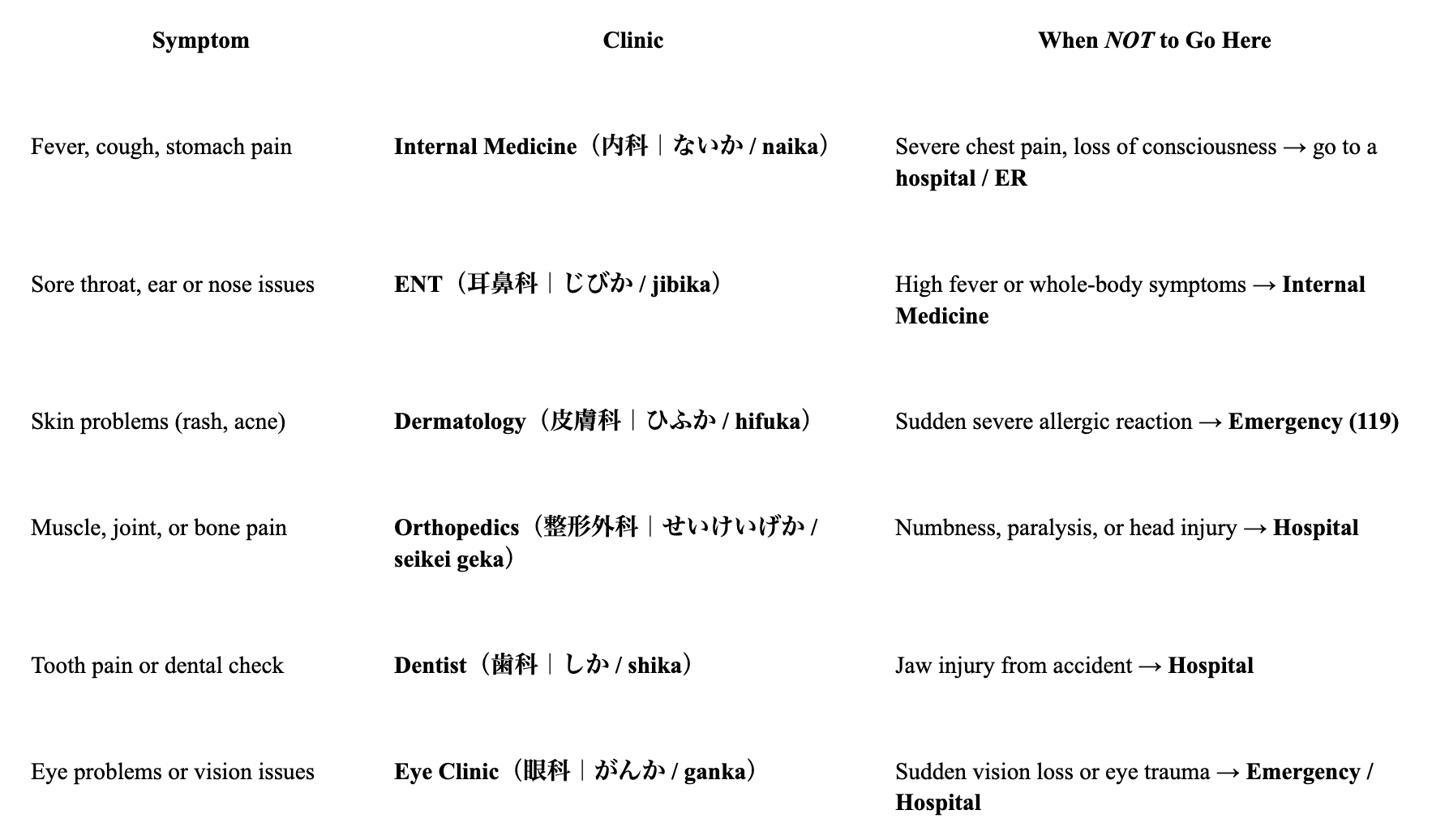
Typical Illnesses by Season
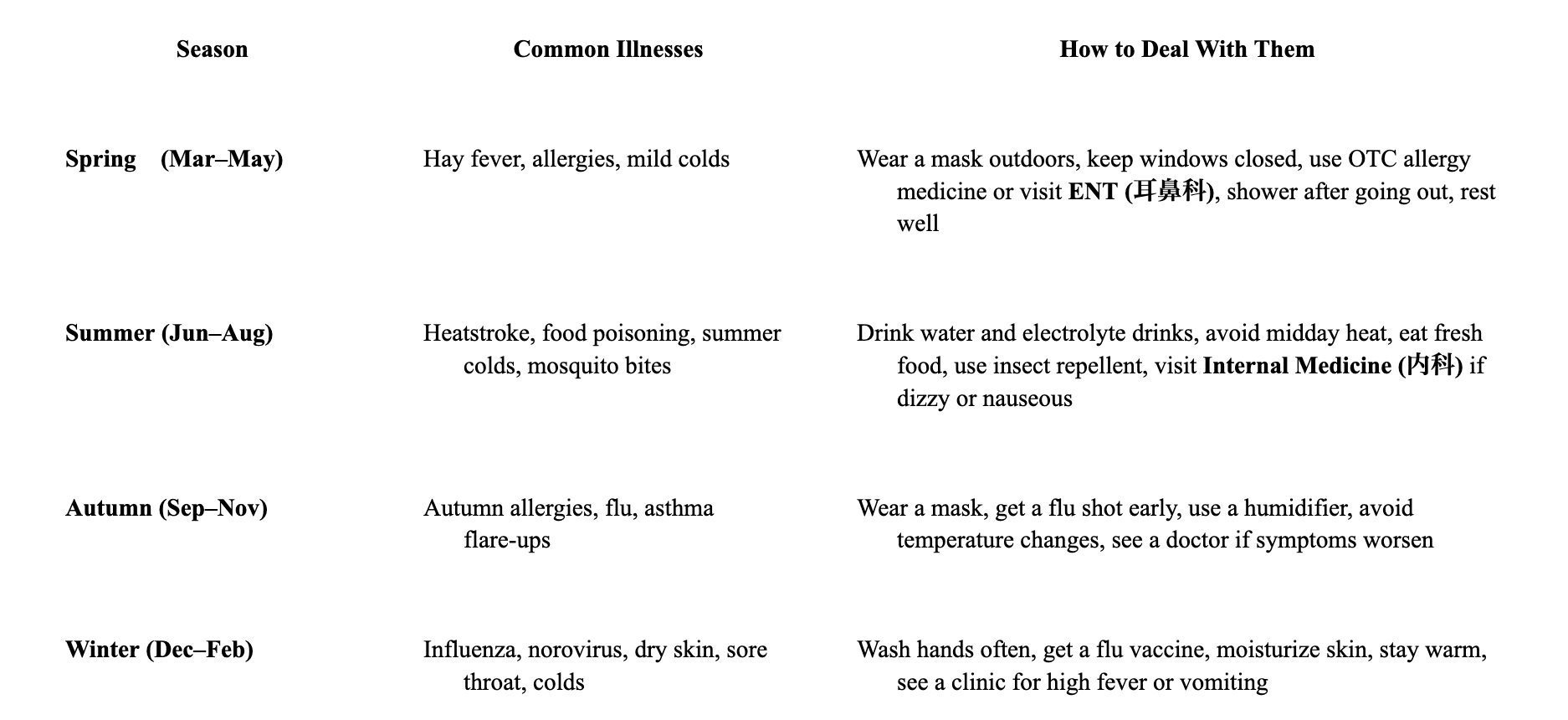
NyuuLy’s Pro Tip:
If you’re unsure which clinic to visit, Internal Medicine(内科 / naika) is usually a safe first choice. They can examine you and refer you to the right specialist if needed.
If symptoms are serious, you should go to a hospital instead of a clinic.
At NyuuLy, we have a community with honest reviews about clinics and healthcare institutions so check that out!
3.2 Making an Appointment
Many clinics accept walk-ins, but some require reservations.
You can book online or call the clinics in advance.
3.3 During the Visit
Here’s the usual flow:
- Reception (give insurance card or My Number Card)
- Fill out a form
- Wait
- Doctor consultation
- Payment
- Pharmacy visit
4. Buying Medicine in Japan
4.1 Over-the-Counter Medicine
You can buy many medicines at drugstores.
Common items:
- Cold medicine
- Allergy medicine
- Pain relievers
- Stomach medicine
Staff may not speak much English, but you can show symptoms or use translation apps.
4.2 Prescription Medicine
After seeing a doctor, you’ll get a prescription.
Take it to a pharmacy near the clinic.
You may receive an medicine notebook/ お薬手帳 (おくすりてちょう / okusuri techō)— keep it!
It helps doctors understand your medication history.
5. Mental Health Support in Japan
5.1 Mental Health Institutions
Mental health care is important — but in Japan, it’s not always easy to find licensed therapists or counselors who speak English and understand cross-cultural experiences.
You can try the following options:
- Online counseling from your home country: If you already have a therapist back home, check whether they offer online sessions. This can feel more familiar and comfortable.
- Foreigner-friendly mental health organizations in Japan
- TELL Japan – https://telljp.com/IMHPJ – https://www.imhpj.org/ These organizations provide English-speaking mental health support and are experienced in working with foreign residents.
- If you feel suicidal or in crisis: Please don’t hesitate to call the lifeline services provided by the organizations above, or call 119 in an emergency. Help is available, and reaching out matters.
5.2 Taking Care of Your Mental Well-Being (Daily Life Tips)
Keeping your mental health balanced is just as important as professional support.
- Exercise regularly and eat well
- Join hobby or interest groups
- Spend time in nature — go to the park, touch the grass (This is one of the best things Japan offers: nature within the city)
- Stay connected with your peers and community
At NyuuLy, we always try to create opportunities — both online and offline — for like-minded people to connect and support each other.
Life in Japan is exciting, but it can also be challenging. It’s one of the busiest countries in the world, so it’s completely okay to feel overwhelmed sometimes.
6. Emergencies in Japan
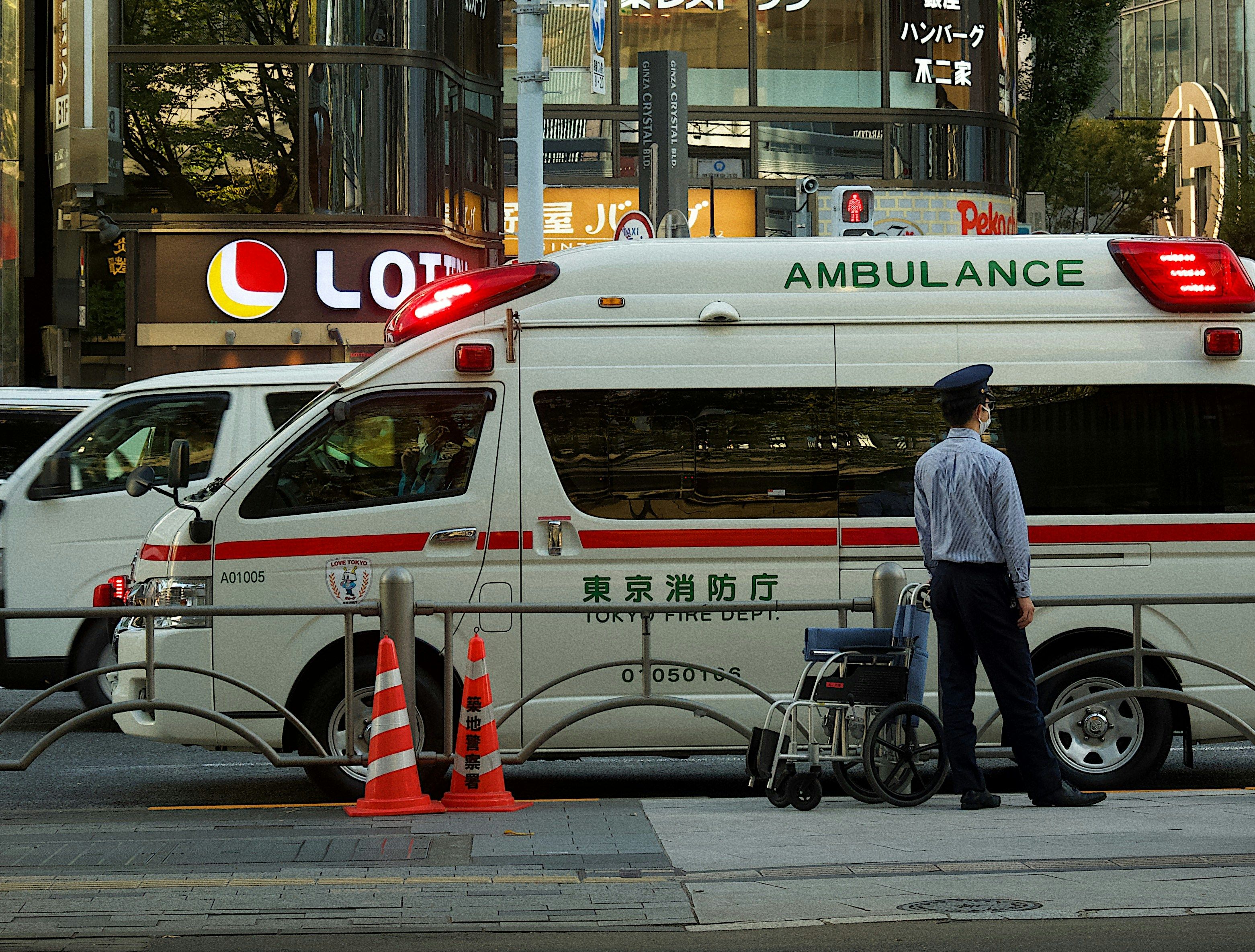
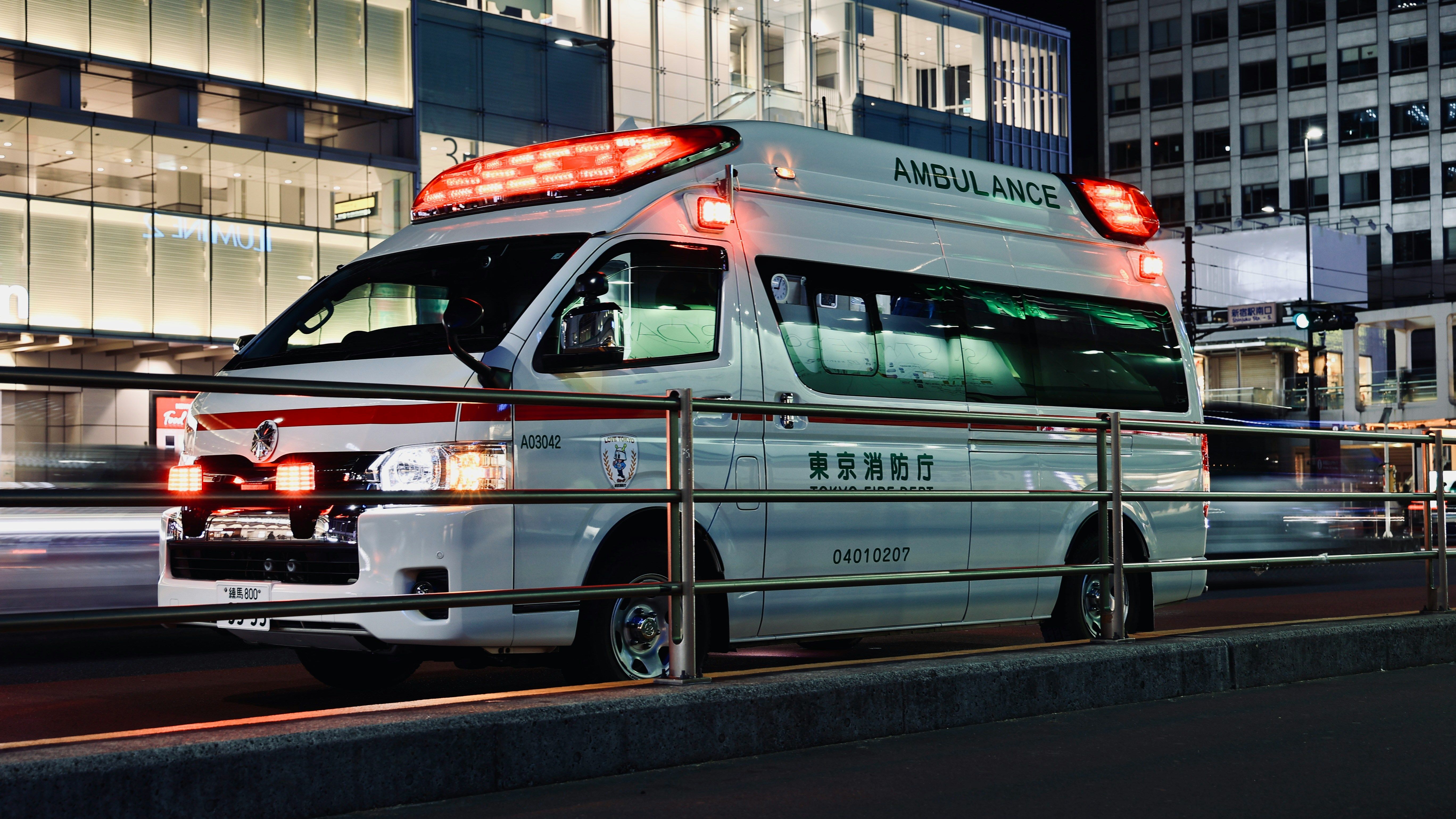
6.1 Calling an Ambulance (119)
Call 119 for emergencies like:
- Traffic accidents (Call 110 for the police and your insurance company too!)
- Fainting
- Severe injuries
- Trouble breathing
Ambulance service is free. They will ask for your name, location and a brief sum up of what happened.
6.2 What to say
Asking for an ambulance
- 救急車をお願いします: きゅうきゅうしゃを おねがいします (kyūkyūsha o onegaishimasu) → Please send an ambulance.
Giving your location
- 場所は__です: ばしょ は __ です (basho wa ___ desu) → The location is ___.
Explaining what happened
- 事故がありました: じこ が ありました (jiko ga arimashita) → There was an accident.
- 人が倒れました: ひと が たおれました (hito ga taoremashita) → Someone collapsed.
- 意識がありません: いしき が ありません (ishiki ga arimasen) → They are unconscious.
7. Final Tips for Staying Healthy in Japan
- Don’t hesitate to visit a clinic — it’s easy and affordable
- Stay hydrated, especially in summer
- Keep basic medicine at home
- Ask questions if you’re unsure
- Take care of your mental health too
Understanding how to take care of yourself — both physically and mentally — is just as important as being prepared for emergencies (which we also cover in our full disaster guide).
The good news is that this gets easier with time. As you settle in, you’ll naturally become more confident navigating daily life in Japan.
Let us at NyuuLy accompany you on this new journey.
Stay healthy, take care of yourself, and enjoy Japan! 🇯🇵